We thank all of our Customers for their kind words.
Some of them have been blogging about us- the most recent one about Natural Hairgrow - thank you, quite a few customers mentioned it.
Here are a few emails we got:
Orchid Antiaging Serum , previously Porcelain Doll
"I am really noticing difference in jawline with the orchid serum it is really good now"
'that bottle that you sent, I cant believe how long it takes to use one little bottle.It sure only takes one little drop or two for the whole entire face."
" have already told people about the products,I have very sceptical friends though but I can definetely see a difference in my face."
"At first I hesitated to buy the HairGrow but the Porcelain Doll (orchid serum) worked so well I thought I'd give it a try."
"I put it on my face as soon as I got out of the shower. It makes your face feel smooth.
I really love the porcelain doll oil it makes my face feel really good.
..loved the feeling that the porcelain doll left on my face, and how relaxing it smells"
Natural Hairgrow *Bestseller*
"However, I have received the item you sent and it works great. Thank you for your support and dedication to provide a pleasure experience and service to your customers, I won't forget it and I will spread this action to others. "
"It was doing pretty good and felt nice on hair when i was using it"
"I liked the hair growth product very much and will probably order it again"
"I have seen some new growth "
" I'm amazed by how soft and silky it can make the hair feel. Right now it's time for me to put a relaxer/perm on my hair and usually it's so hard to manage without one...the katuri (Hairgrow) is making it manageable enough where I can comb right through it without any problem "
" My mom took off her braids and had a patch, within one week of using, I couldnt see the difference between that and the rest of her head. "
Acne Serum & Acne Wash
"On Father's Day we got to our destination and realized that for the first time in 10 years, I was out (somewhere other than errands!) without any foundation on! And in pictures my skin looked great. I still have some red marks (previous acne scars) but the absence of "active" acne is such a wonderful thing!!"
"my mom tried some of my acne wash and loves it... she's gonna switch over from proactiv"
"I am very happy with my products - I don't think I've had a new pimple in over 2 weeks and my scars do seem to be lightening plus the overall feel of my skin is improved. And this is mainly from the acne wash (which I now love!) and the acne blend and acne scars."
Eye Wrinkle Eraser
"the eye wrinkle eraser seems to be working well. I even put some on my squinting wrinkle between my eyebrows and think I see results!'
Lash Lengthener
"I love the lash lengthener. I've already noticed a significant difference!"
Tummy Tucker
"Well, I am not really to for sure if its from me working so hard at the gym(I just started going to the gym about 4 weeks ago) or actually using that oil. I really think its a combination of both. "
"I use the tummy tightener oil every morning when I wake up and right before I go to bed.It amazes me just a nickel size amount goes along way on the tummy. It has a really relaxing smell to it."
"I had a little extra skin that would hang over my pants after I had my baby and since using the Tummy Tuck Extra it is all gone, my stomach is flat again!! I absolutely love it! "
Active Stretchmarks Reducer
"I've even used Strivectin for my stretchmarks and was really disappointed that I didnt get the help I thought I would. I tried (your product) a year later, and was really happy to see them fading in 2 weeks"
"I had to look at your website, after seeing how good Brittny's (my daughter) strechmarks looked (in 1 and 1/2 week). I cant wait to get the stuff I ordered"
Surestop to Eczema
I quit using the Sure Stop on myself and the eczema around my eyes came back. So I tried it again to make sure it wasn't a fluke and it worked again! I am so happy with it!"
'(I use ) exzema jelly when we're out and about. Thanks again, you're making great products"

Friday, August 22, 2008


Thursday, August 7, 2008
Plai for Intense musculo-skeletal Pain Relief: Arthritis, etc

In recent times, the essential oil of Plai is being researched for its multiple benefits to the body. Plai, of the ginger family, is extremely helpful to inflamed areas, be they joints and muscles or kidneys and lungs, to a degree that others do not reach.

Research says that on inflamed joints, undiluted Plai eases pain over 18 hours, which other oils cannot do, however skin sensitization is a possibility. On joints inflamed due to injury, Plai was best combined with oils such as black pepper, lemon or neroli, cedarwood and orange .
Our Intense Pain Relief Serum is a combination of Plai with Ginger, Marjoram, Bergamot, Cumin Oils and provides immediate and sustained relief for musculo-skeletal pain.
Pain that is not easily relieved by other methods, like pain killers &and topical treatments respond well to this Serum. Injuries which respond include a catch in back, neck and shoulder strain due to sudden activity. Lately, it has a lot of users for Hand-wrist pain due to frequent computer usage which leaves fingers limited in flexibility and joints aching due to repeated usage.
Any pain which restricts movement in joints and also leaves muscles sore finds a good degree of relief.
It is well liked by Soccer and Baseball coaches, especially those who aren't in regular training!
------------
Plai to relieve arthritis pain:
This is an oriental herb and very little is known in the western world about Plai, which is such a pity. More arthritis & rheumatic pain users should incorporate this oil into their daily regimen to increase their mobility.
Among the many essential oils I have used sporadically for pain, Plai is by far the best for joint/muscle pain - for arthritis related pain, perhaps even Fibromyalgia can be helped too- the oil profile makes it a possibility
.
I have used about 30+ EOs for pain , many common ones & many uncommon ones, but the immediate & sustained relief provided by Plai hasnt been surpassed by any for the joint & back areas.
I have used alone and in synergies these Essential oils - Bay (leaf), Bergamot, Black Pepper, Black Cumin, Clove, Cinnamon bark, Cardamom, Fennel, Eucalyptus, Geranium, Ginger, Helichrysium, Hyssop, Jasmine, Juniper,Lavender, Marjoram,Niaouli, Nutmeg,Orange, Patchouli, Peppermint, Rosemary, Thyme, Ylang the irreplaceable Sandalwood, & a few more.
----------------
Other info
Plai is also used in post operative blends in the East on knees,shoulders and through the process of hip-replacement. It is also able to relieve arthritis pain and increase mobility, and well worth looking at for those looking for alternatives to traditional painkillers that irritata the stomach lining.
Some research has also been done suggesting using Plai for asthma (exercise and allergy induced), with tarragon or rosemary and cypress, causes the attacks to diminish in intensity.even though aroma is a little overwhelming at first, even just smelling the blend causes the attack to reduce.
Wednesday, August 6, 2008
Exploring the Orchid, Product Review: Orchid Face-lift Serum
 Orchid Face-lift Serum, our "Fountain of Youth" !
Results say that it works as close to a Botox-in-a-bottle as possible.
Incredible skin tightening effects and lift are seen with it about 1-2 weeks for an eye-opening, face-lifting results.
L Duke send her Customer pics & Testimonial (2010)
2014 Client Pics & Testimonial & more on Orchid Serum
It uses Precious Orchid Oil
The orchid flower, national flower of Thailand & Singapore, has been used in Asia for centuries for its reparative and protective properties. Orchids are known for their emollient properties, antioxidant properties and reducing the appearance of fine lines.
Ideal for all skin types and rich in minerals, which exist naturally in the skin, such as zinc, calcium, magnesium, iron and copper, Orchid Oil is an ingredient in Porcelain Doll : Orchid Serum & Tummy Tucker Xtra : for giving the appearance of firmer mid-riff skin.
This super potent plant lipid, provides seeds the energy that they need to survive during the germination process. Since it is a lipid, it feels smooth and light, and is immediately absorbed on contact, unlike an oil.
For optimum extraction of Orchids' essential oils, the flowers are infused into an emollient base in an oxygen- rich environment. Cymbidium grandiflorum flowers are used in this process.
 It forms the active ingredient in Orchid FaceLift Serum with superb smoothing and clarifying properties. The different essential oils used in it help reduce wrinkles and folds, a great difference is seen along the jawline where sagging skin is easily seen. The trick is to use the most minimum quantity possible, a few precious drops are enough to cover the entire face.
For optimum extraction of Orchids' essential oils, the flowers are infused into an emollient base in an oxygen- rich environment. Cymbidium grandiflorum flowers are used in this process.

Also a component of Original Tummy Tucker Xtra Serum, which, along with other ingredients, aids the speedy reduction of a pospartum sagging belly, by increasing collagen and elastin in that area and making the flabby skin to shrink inwards.
Orchid Extract, is clinically tested to be non-irritating and hypoallergenic and is gentle for use even for sensitive individuals.
Its usage in beauty and bath product formulations has multiple benefits.
Added
I found an Orchid Serum with similar ingredients Guerlain 'Orchidée Impériale' Serum
The claims are nearly the same as ours, though much better- written and packaged and priced. $400

A new anti-aging concentrate for an instant rejuvenating effect. This unique serum contains the highest level of Imperial Orchid molecular extract. It releases its anti-aging benefits at the heart of the skin with a more intensive rejuvenating effect thanks to a Biofilm technology. This new, ultra-sophisticated formulation tightens, restores radiance and enhances the complexion. Smooth and beautiful, your skin immediately glows with a new youthfulness and regains firmness, strength and density. When used with the Orchidée Impériale Cream, this sumptuous elixir creates the most precious of synergies, for the ultimate performance on all the signs of aging.
Added
I found an Orchid Serum with similar ingredients Guerlain 'Orchidée Impériale' Serum
The claims are nearly the same as ours, though much better- written and packaged and priced. $400

A new anti-aging concentrate for an instant rejuvenating effect. This unique serum contains the highest level of Imperial Orchid molecular extract. It releases its anti-aging benefits at the heart of the skin with a more intensive rejuvenating effect thanks to a Biofilm technology. This new, ultra-sophisticated formulation tightens, restores radiance and enhances the complexion. Smooth and beautiful, your skin immediately glows with a new youthfulness and regains firmness, strength and density. When used with the Orchidée Impériale Cream, this sumptuous elixir creates the most precious of synergies, for the ultimate performance on all the signs of aging.
- By Guerlain.
Tuesday, August 5, 2008
Serums vs other treatment lotions
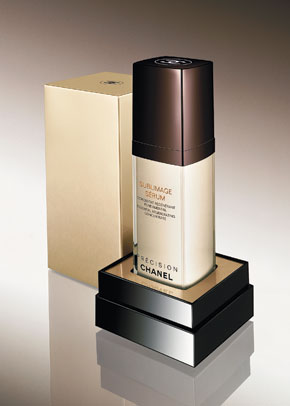 Nick Morante, Cosmetic Authority, says about Serums:
"Serums for the face and body are used to treat specific skin conditions such as acne, wrinkles, skin redness or other skin problems. These serums are much more potent than conventional treatment creams or lotions (for these problems). Creams and lotions for the most part contain less than 10 percent, sometimes only 0.1% of the active ingredients to treat each specific skin condition. The major difference is that serums contain up to 70 percent or more active ingredients.
There are serums that contain extremely high concentrations of Retinol (a vitamin A derivative), vitamin C derivatives, vitamin E derivatives as well as other powerful antioxidants used to treat wrinkles and aging skin, and also act as super free radical scavengers. Serums can also contain high levels of extracts such as licorice, ginseng, grape seed extracts as well as many others all known to have specific healing and treatment functions and activity on the skin, without being listed as OTC drug ingredients.
The cost to formulate serums over conventional treatment creams and lotions is extremely high owing to the high concentration of active ingredients. This is obviously reflected in the retail cost of the product. Some serums are being marketed by private companies such as Bobbi Brown, Neutrogena or Almay."
 |
| Orchid Facial Serum, Holistic Serums |
Our compelling Handmade Serums can compete with the best in the market -
Because we have experienced the best of the Market,
We know their pros.
understand the depth of skin they touch, acknowledge their visible effects, the gladness they give..
We know their cons.
the time for the effect to taper off, leaving everything unchanged, with nothing but disillusionment.
Holistic Serums aspires to enhance the pros, reduce the cons-
They nourish the Skin intensely, and benefits are multi-level, more long lasting than top-of-the-line Serums of large name brands.
Being a small business, our con is packaging, an ongoing process of improvement. in small steps.
Unlike our Serums, which have already reached.
Our Luxury, exclusive serums are priced to stay accessible to the people who need them.
Read about Who Needs Holistic Serums
Holistic Serums, contain active ingredients in the quantity 50-100%, which is why they are extremely nourishing.
Holistic Serums provide maximum benefit- in terms of turning back the clock on the aging process, reducing hairloss & activating growth- which is natural, dehydration of body tissues, darkening.
Our products contain no water! no dilution of product.
Processed Food & the Twinkie.

You are what you eat -- and what you don't eat.
Many of us dont quite hit the entire food pyramid, but watch what you are eating.
Even foods claimed to be 100 percent natural and all whole grain, sometimes arent when you look at the ingredients. A good rule of thumb is that the first ingredient should not be sugar, should not be high fructose corn syrup, and contain no artificial colors or dyes.
Many ingredients in processed food are made directly from petroleum products, including natural gas or crude oil, says Ettinger in "Twinkie, Deconstructed." While eight of the ingredients in Twinkies come from domestic corn, and three from soybeans, others are derived from sources as divergent as rocks, trees and petroleum products (the latter are used to make niacin and food coloring, among other food products).
Packed into this tiny cake are 39 ingredients. flour and eggs, are expected, but cellulose gum, calcium sulfate, and Polysorbate 60? Those ingredients are also used in Sheetrock, shampoo, laundry detergent, even rocket fuel, and at least five came from rocks
The raw materials come from all over; the Far East, Africa, India, Europe, the Middle East and the United States. "You're biting into the Twinkie industrial complex. You are really biting into a worldwide network. I call it the ‘Twinkie Nexus,'" explained food writer Steve Ettlinger.
The vitamins, artificial flavors and colorings come from petroleum. Phosphates from limestone make Twinkies light and airy. Only one preservative is used. "Sorbic acid ... is made from natural gas. That really blew my mind," Ettlinger said.
As for the best part of the Twinkie, the creamy middle, Ettinger says there's no cream in the cream at all. "It's mostly Crisco. It's mostly shortening," he explained.
The makers of Twinkies issued a statement saying, "Deconstructing the Twinkie is like trying to deconstruct the universe. We think the millions of people would agree that Twinkies just taste great."
Eating a Twinkie won't hurt you, but how we make and consume processed foods may come at a cost. "It is what it is. If you want healthy, if you want something good for you, eat your broccoli," Ettlinger said.
--------
In Michael Pollan’s newest book "In Defense of Food" makes interesting.
He gives the simplest rules to live by and they make the smartest sense.
Like, don’t buy anything with ingredients you can’t pronounce or that your great-grandmother wouldn’t recognize.
More and more people are advocating this- I hear it on the TV, read about it in magazines
I wish he could use more layman english, but the gist of it is that the value of whole foods has been sidelined by a lot of marketing jargon for processed foods.
Excerpt from the book
..common food animals rejiggered to fit nutritionist fashion, as animal scientists figured out how to breed leaner pigs and select for leaner beef. ..
In the years since then, egg producers figured out by feeding flaxseed to hens, they could elevate levels of omega-3 fatty acids in the yolks.
Aiming to do the same thing for pork and beef fat, the animal scientists are now at work genetically engineering omega-3 fatty acids into pigs and persuading cattle to lunch on flaxseed in the hope of introducing the blessed fish fat where it had never gone before: into hot dogs and hamburgers.
Pic: Avocado-mango salad with Passion fruit vinaigrette, epicurious.com
 But whole foods are the exceptions. The typical whole food has much more trouble competing under the rules of nutritionism, if only because something like a banana or an avocado can't quite as readily change its nutritional stripes. (Though rest assured the genetic engineers are hard at work on the problem.)
To date, at least, they can't put oat bran in a banana or omega-3s in a peach. So depending on the reigning nutritional orthodoxy, the avocado might either be a high-fat food to be assiduously avoided (Old Think) or a food high in monounsaturated fat to be embraced (New Think). The fate and supermarket sales of each whole food rises and falls with every change in the nutritional weather while the processed foods simply get reformulated and differently supplemented.
That's why when the Atkins diet storm hit the food industry in 2003, bread and pasta got a quick redesign (dialing back the carbs; boosting the proteins) while poor unreconstructed potatoes and carrots were left out in the carbohydrate cold. (The low-carb indignities visited on bread and pasta, two formerly "traditional foods that everyone knows," would never have been possible had the imitation rule not been tossed out in 1973. Who would ever buy imitation spaghetti? But of course that is precisely what low-carb pasta is.)
A handful of lucky whole foods have recently gotten the "good nutrient" marketing treatment: The antioxidants in the pomegranate (a fruit formerly more trouble to eat than it was worth) now protect against cancer and erectile dysfunction, apparently, and the omega-3 fatty acids in the (formerly just fattening) walnut ward off heart disease. A whole subcategory of nutritional science — funded by industry and, according to one recent analysis,* remarkably reliable in its ability to find a health benefit in whatever food it has been commissioned to study — has sprung up to give a nutritionist sheen (and FDA-approved health claim) to all sorts of foods, including some not ordinarily thought of as healthy.
 The Mars Corporation recently endowed a chair in chocolate science at the University of California at Davis, where research on the antioxidant properties of cacao is making breakthroughs, so it shouldn't be long before we see chocolate bars bearing FDA-approved health claims. (When we do, nutritionism will surely have entered its baroque phase.) Fortunately for everyone playing this game, scientists can find an antioxidant in just about any plant-based food they choose to study.
Yet as a general rule it's a whole lot easier to slap a health claim on a box of sugary cereal than on a raw potato or a carrot, with the perverse result that the most healthful foods in the supermarket sit there quietly in the produce section, silent as stroke victims, while a few aisles over in Cereal the Cocoa Puffs and Lucky Charms are screaming their newfound "whole-grain goodness" to the rafters. Watch out for those health claims.
Monday, August 4, 2008
Green Market Bags! Baby bottles ..
 What Makes This Product Sustainable
Reisenthel Market Baskets are another tool to help you cut down on disposable plastic & paper bags (especially at the farmer's market). They are also a smart alternative to cardboard boxes. Well made and designed to last, using Market Baskets can help eliminate hundreds of disposable bags over a lifetime. Reisenthel's philosophy is based on creating products that enhance quality of living while being respectful to the environment. All Reisenthel products are made from recyclable materials of the highest quality. Bottom line, they look amazing and you'll want to use them - making it easy to say no plastic and paper bags. 
Stainless Steel Baby sippy cups,
Saturday, August 2, 2008
Demonstrating Plant Roots and brains?
2 back-back interesting articles about research that has found that roots act like brains, about slime that changed its growth pattern to grow towards food.
Which in an oblique way opens the mind to the possibility of holistic theory, viz., that whole extracts of plants carry intelligent information to the whole human which is why they are capable of treating the body's imbalances.
Excerpted:
“The tip of the root (of plants) acts like the brain of one of the lower animals,” Darwin said.
Roots that act like brains? Does this mean plants have memory? Collect data, store it, interpret it, and then act on it, in constantly changing, dynamic situations? This sounds so perilously close to words and phrases associated with humans, such as “thinking,” “intelligence,” and “decision making,” that science shied away from anything that suggested plant life could be sentient.
In modern times, molecular biologists focused on DNA as the single template from which all life was fashioned and maintained.
However, with their mapping of the human genome as we entered the 21st Century, they discovered that humans carry only about 25,000 protein-coding genes. This was startling, because the simple nematode worm has about 19,000 such genes — and the human body is immeasurably more complex than a worm’s. So, why didn’t humans have a lot more protein-coding genes — genes that instruct proteins what to do?
To find answers, molecular biologists had to revise their notions of the genetic code. They knew that a huge number of genes in the human genome — making up more than 98 per cent of the genome — don’t code protein. These, they had previously dismissed as evolutionary leftovers, or junk DNA.
In an enormous turnaround, they began looking at these non-coding genes more closely and discovered they were not junk after all. They had an extremely important function.
A key to the mystery lay in the nature of complexity. There was no doubt protein-coding DNA was capable of creating complexity. It could issue instructions for creating the legions of proteins that, in the case of humans, make up half their dry weight. But regulating the process was another matter. Without regulation, the results would be mostly chaotic.
In addition, as the complexity of organisms increased, the amount of regulation that was needed increased exponentially. (To become technical, it increased as a quadratic function, which means it increased by the square of the number of genes in the organism.)
Regulation, it turns out, is the job of RNA (ribonucleic acid), located in the nucleus of cells along with DNA. It’s from the so-called junk DNA that RNA gets regulatory instructions.
This revelation opened the intellectual floodgates, and put to rest the notion that life was ruled by a robotic DNA ritually coding proteins, much like a machine stamping out widgets.
Once regulation became a new focus, it raised the question: How does internal regulation adapt to constantly changing external conditions? Or, in the case of plants, how do they respond to changes in their surroundings?
There are 15 to 20 things that plants monitor — including weather conditions, light, calcium and aluminum availability, locations of other plants, electrical fields, chemical signals, smells, and waves of all kinds. In addition, they have remarkable capacities for communication. For instance, when infected by pathogens, they can release airborne volatiles, warning neighbouring plants to beef up their immune systems.
Seven years ago, however, a simple experiment demonstrated that a plant can identify the shortest route to food in a maze, prompting researchers to conclude that, “This remarkable process of cellular (analysis) implies that cellular materials can show a primitive intelligence.”
The plant was one of the lower fungi, a slime mould, which is a thin organism that spreads across cool, shady, moist places. There are 550 different species of this type of mould in a variety of colours, some of them spectacularly beautiful. The experiment, led by Toshiyuki Nakagaki at the Bio-Mimetic Control Research Centre in Nagoya, Japan, is reported in Nature, 2000, 407:470.
Initially, the slime occupied all the paths in the maze, but within eight hours, it had identified the shortest path to the food, and had withdrawn from all other paths. Thus, said the researchers, it had “maximize(d) its foraging efficiency, and therefore its chances of survival.”
Which in an oblique way opens the mind to the possibility of holistic theory, viz., that whole extracts of plants carry intelligent information to the whole human which is why they are capable of treating the body's imbalances.
Excerpted:
“The tip of the root (of plants) acts like the brain of one of the lower animals,” Darwin said.
Roots that act like brains? Does this mean plants have memory? Collect data, store it, interpret it, and then act on it, in constantly changing, dynamic situations? This sounds so perilously close to words and phrases associated with humans, such as “thinking,” “intelligence,” and “decision making,” that science shied away from anything that suggested plant life could be sentient.
In modern times, molecular biologists focused on DNA as the single template from which all life was fashioned and maintained.
However, with their mapping of the human genome as we entered the 21st Century, they discovered that humans carry only about 25,000 protein-coding genes. This was startling, because the simple nematode worm has about 19,000 such genes — and the human body is immeasurably more complex than a worm’s. So, why didn’t humans have a lot more protein-coding genes — genes that instruct proteins what to do?
To find answers, molecular biologists had to revise their notions of the genetic code. They knew that a huge number of genes in the human genome — making up more than 98 per cent of the genome — don’t code protein. These, they had previously dismissed as evolutionary leftovers, or junk DNA.
In an enormous turnaround, they began looking at these non-coding genes more closely and discovered they were not junk after all. They had an extremely important function.
A key to the mystery lay in the nature of complexity. There was no doubt protein-coding DNA was capable of creating complexity. It could issue instructions for creating the legions of proteins that, in the case of humans, make up half their dry weight. But regulating the process was another matter. Without regulation, the results would be mostly chaotic.
In addition, as the complexity of organisms increased, the amount of regulation that was needed increased exponentially. (To become technical, it increased as a quadratic function, which means it increased by the square of the number of genes in the organism.)
Regulation, it turns out, is the job of RNA (ribonucleic acid), located in the nucleus of cells along with DNA. It’s from the so-called junk DNA that RNA gets regulatory instructions.
This revelation opened the intellectual floodgates, and put to rest the notion that life was ruled by a robotic DNA ritually coding proteins, much like a machine stamping out widgets.
Once regulation became a new focus, it raised the question: How does internal regulation adapt to constantly changing external conditions? Or, in the case of plants, how do they respond to changes in their surroundings?
There are 15 to 20 things that plants monitor — including weather conditions, light, calcium and aluminum availability, locations of other plants, electrical fields, chemical signals, smells, and waves of all kinds. In addition, they have remarkable capacities for communication. For instance, when infected by pathogens, they can release airborne volatiles, warning neighbouring plants to beef up their immune systems.
Seven years ago, however, a simple experiment demonstrated that a plant can identify the shortest route to food in a maze, prompting researchers to conclude that, “This remarkable process of cellular (analysis) implies that cellular materials can show a primitive intelligence.”
The plant was one of the lower fungi, a slime mould, which is a thin organism that spreads across cool, shady, moist places. There are 550 different species of this type of mould in a variety of colours, some of them spectacularly beautiful. The experiment, led by Toshiyuki Nakagaki at the Bio-Mimetic Control Research Centre in Nagoya, Japan, is reported in Nature, 2000, 407:470.
Initially, the slime occupied all the paths in the maze, but within eight hours, it had identified the shortest path to the food, and had withdrawn from all other paths. Thus, said the researchers, it had “maximize(d) its foraging efficiency, and therefore its chances of survival.”
Eat Coconut Oil: Reduce Weight, Cholesterol, Metabolism, Thyroid Function,

COCONUT OIL
What is it?
Derived from coconuts, this saturated fat is usually sold in solid form and melts on the skin. It can be used in cooking and baking. Always buy virgin organic coconut oil, not processed, cheaper oils - which may lose benefits through processing.
It is supposedly the only Medium Density Lipid and is a healthy cooking oil, even at high temperatures. Does not break down into trans-fats and does not go rancid like all other oils.
What are the supposed benefits?
John Appleton, a coconut-oil distributor from Takapuna, says this former delinquent is back in favour with some scientists who say it is one of nature's richest sources of medium chain triglycerides (MCTs).
"MCTs are burned for energy instead of being stored as fat, so taking coconut oil can contribute to a weight management programme.
Said to increase thyroid function and metabolic rate to aid in weight loss.
"Virgin coconut oil also contains acids found in human breast milk (Lauric Acid) which are known to have anti-viral, anti-bacterial and anti-fungal properties."
These properties of coconut oil have been linked to lowering bad cholesterol levels, to have an anti-ageing effect on the skin and be good for the hair.
Some studies have shown coconut oil to be beneficial in cases of colonic and breast cancer.
What's the best way to take it?
Many people take a couple of tablespoons a day straight from the jar. Or you can blend it into smoothies or porridge.
What's the medical opinion?
"We thought it was bad for us but it's a good plant fat, like nuts and avocado, and it's fantastic for helping people lose weight."
..

Pic above links to recipe of fragrant coconut rice, but not the south Indian variety I make, with Chicken curry has all my American friends salivating, sweat-pouring and wanting more.
In India, specifically Kerala, where 80% of crop is coconuts, Coconut oil is used in cooking, and making delicacies, for skin and hair. Natives have generally smooth skin, long, thick and dark hair and there are very low obese people. Kerala also has the highest literacy rate of 96% in India.
What is it?
Derived from coconuts, this saturated fat is usually sold in solid form and melts on the skin. It can be used in cooking and baking. Always buy virgin organic coconut oil, not processed, cheaper oils - which may lose benefits through processing.
It is supposedly the only Medium Density Lipid and is a healthy cooking oil, even at high temperatures. Does not break down into trans-fats and does not go rancid like all other oils.
What are the supposed benefits?
John Appleton, a coconut-oil distributor from Takapuna, says this former delinquent is back in favour with some scientists who say it is one of nature's richest sources of medium chain triglycerides (MCTs).
"MCTs are burned for energy instead of being stored as fat, so taking coconut oil can contribute to a weight management programme.
Said to increase thyroid function and metabolic rate to aid in weight loss.
"Virgin coconut oil also contains acids found in human breast milk (Lauric Acid) which are known to have anti-viral, anti-bacterial and anti-fungal properties."
These properties of coconut oil have been linked to lowering bad cholesterol levels, to have an anti-ageing effect on the skin and be good for the hair.
Some studies have shown coconut oil to be beneficial in cases of colonic and breast cancer.
What's the best way to take it?
Many people take a couple of tablespoons a day straight from the jar. Or you can blend it into smoothies or porridge.
What's the medical opinion?
"We thought it was bad for us but it's a good plant fat, like nuts and avocado, and it's fantastic for helping people lose weight."
..
Pic above links to recipe of fragrant coconut rice, but not the south Indian variety I make, with Chicken curry has all my American friends salivating, sweat-pouring and wanting more.
In India, specifically Kerala, where 80% of crop is coconuts, Coconut oil is used in cooking, and making delicacies, for skin and hair. Natives have generally smooth skin, long, thick and dark hair and there are very low obese people. Kerala also has the highest literacy rate of 96% in India.
Elephant poo paper!! Natural & Green
I cant believe this! well, you can't get more natural than this..
There is a company selling Paper made from elephant poo!
with added fibers from banana trees & pineapples so the paper will be thicker & stronger.

Hand made paper stationery which is completely recyclable.
Any takers from the green supporters
Part of the proceeds go to Elephant conservation projects. And items ship from Texas.
There is a company selling Paper made from elephant poo!
with added fibers from banana trees & pineapples so the paper will be thicker & stronger.
Hand made paper stationery which is completely recyclable.
Any takers from the green supporters
Part of the proceeds go to Elephant conservation projects. And items ship from Texas.
Subscribe to:
Posts (Atom)